








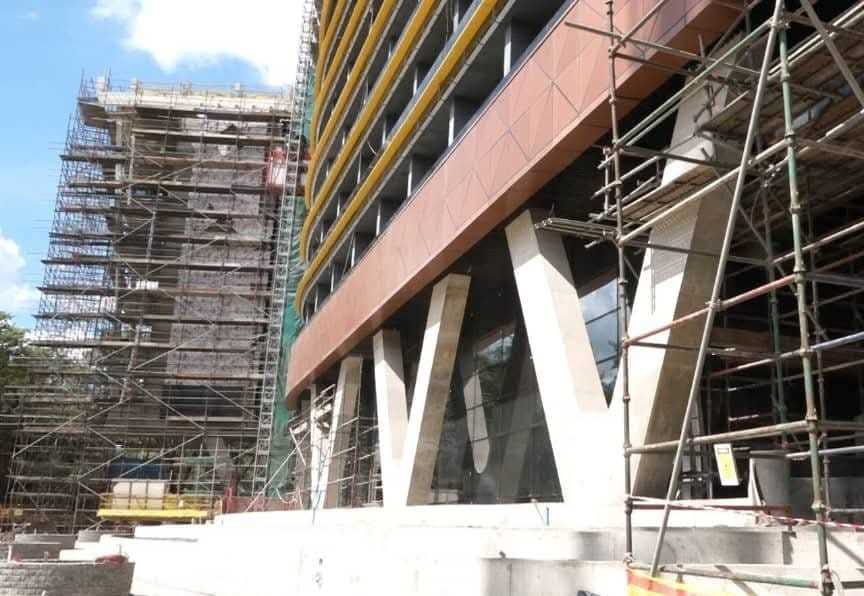
The Afreximbank African Trade Centre in Harare is nearing completion, positioning Zimbabwe at the centre of intra-African commerce under the National Development Strategy 2 (NDS2).
The US$80–100 million facility spans 35 000 square metres and is expected to transform the capital into a strategic trade and investment gateway.
The complex features a 110-room aparthotel, a 750-seat conference centre, a tech incubation lab and a trade hub designed as a one-stop-shop for trade information and AfCFTA-related services.
It will also house the Southern Africa Regional Office of the African Export-Import Bank (Afreximbank).
Humphrey Nwugo, Regional Chief Operating Officer, said the Harare centre would oversee the bank’s activities in 13 southern African nations.
He added that it would serve as “a catalyst for Zimbabwe’s foreign direct investment and growth.”
Nwugo said the project would assist Zimbabwe and the Sadc region through FDI, job creation in the construction industry, and downstream business.
Related Stories
He added that it would help rebuild Harare “as an important financial services center and intra-African trade hub for the southern African area.”
The Harare facility is described as a historic center for intra-African trade facilitation and will house Afreximbank’s permanent regional office alongside a world-class hotel and major conference centre.
It will also accommodate a trade information centre and a tech incubation lab targeting Zimbabwean SMEs and start-ups seeking to scale.
The Harare hub forms part of a wider Afreximbank African Trade Centre network that includes Abuja, Cairo, Kampala, Abidjan, Yaoundé, Bridgetown, Kigali and Tunis. Together, the centres will connect buyers, sellers, financial institutions, governments and enterprises across Africa and the global trade community.
Dr George Elombi, President and Board Chair of Afreximbank, said “The Afreximbank African Trade Centre in the New Capital is meant not simply to accommodate the expansion of the Bank, but provide a concrete solution designed to address the lack of trade and investment information among African businesses.”
He added that this gap has confounded the growth of intra-African trade and investment for nearly seven decades.







Leave Comments